

When we think about writing, most of us picture neat lines marching from left to right across the page.
But not every language follows the same path.
Some scripts race right to left, others cascade down the page, and a few even zigzag like an ox plowing a field.
The direction a language takes isn’t random — it’s steeped in history, culture, and even practicality.
Today, let’s take a quick journey through the fascinating ways humans have chosen to put their words on a page.
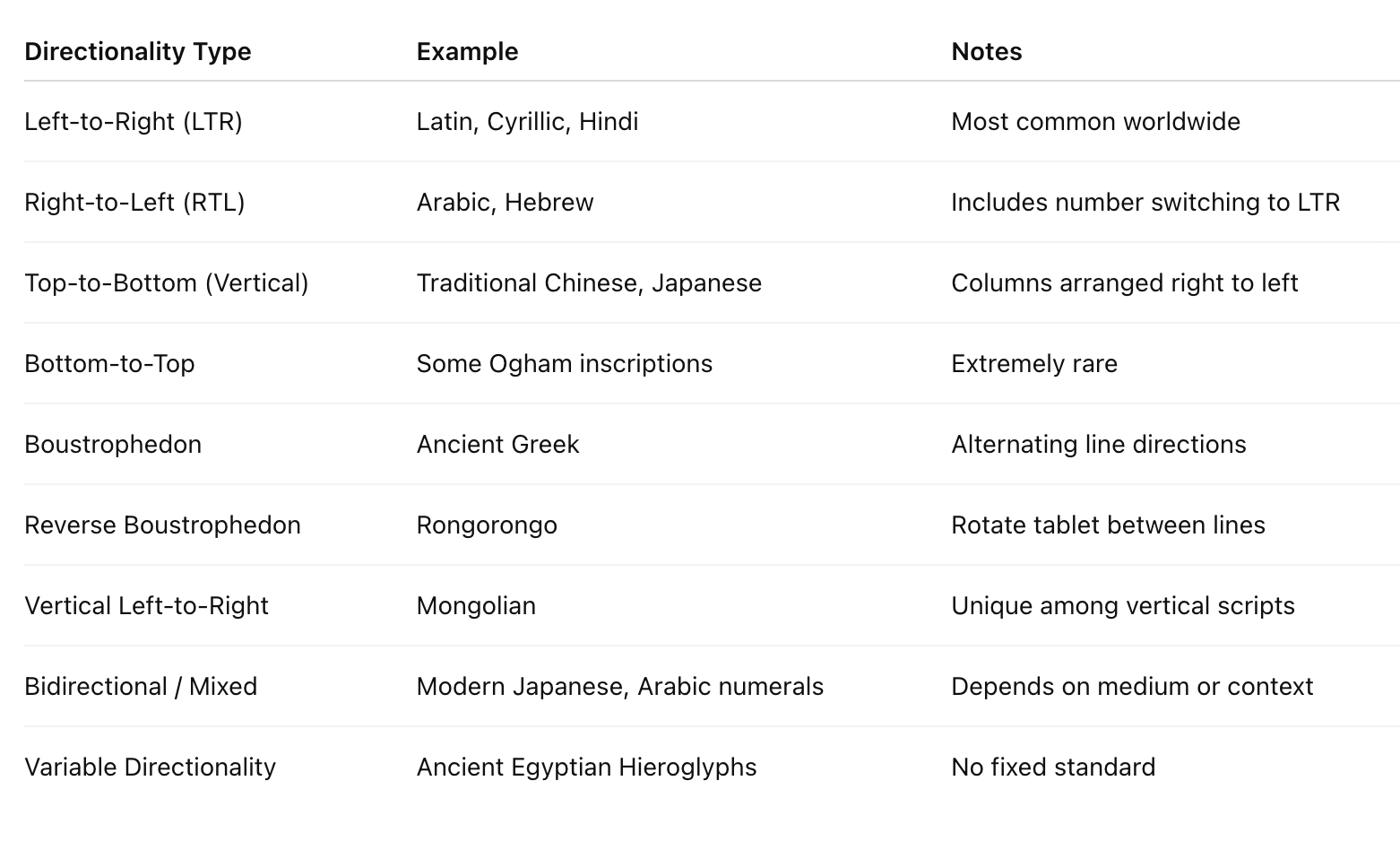
? Left-to-Right (LTR)
If you’re reading this article, you’re already traveling left to right — the most common writing direction in the world today.
Languages that use it:
- English ??
- Spanish ??
- French ??
- German ??
- Russian ?? (Cyrillic script)
- Hindi ?? (Devanagari script)
Why left to right?
✍️ Many believe it’s linked to the fact that most people are right-handed. Pulling a writing tool across the page was smoother and cleaner than pushing it, especially when working with messy inks. Over time, this became the natural flow for many major scripts.
? Right-to-Left (RTL)
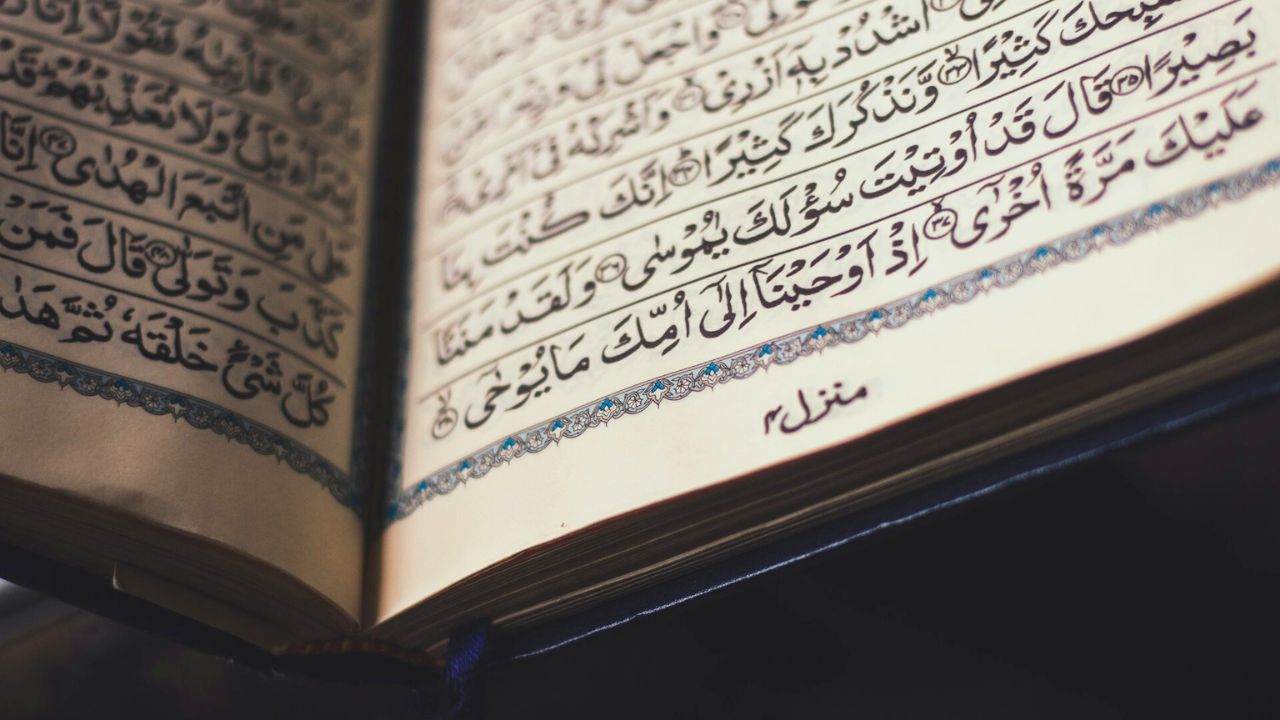
In some parts of the world, reading naturally flows from right to left — the opposite of what many are used to.
Languages that use it:
- Arabic ??
- Hebrew ??
- Persian (Farsi) ??
- Urdu ??
Why right to left?
✍️ Many ancient scripts were first carved into stone, and chiseling from right to left was easier for right-handed carvers. Over time, this direction stuck, influencing not just religious texts but daily writing across entire cultures.
? Top-to-Bottom (TTB)
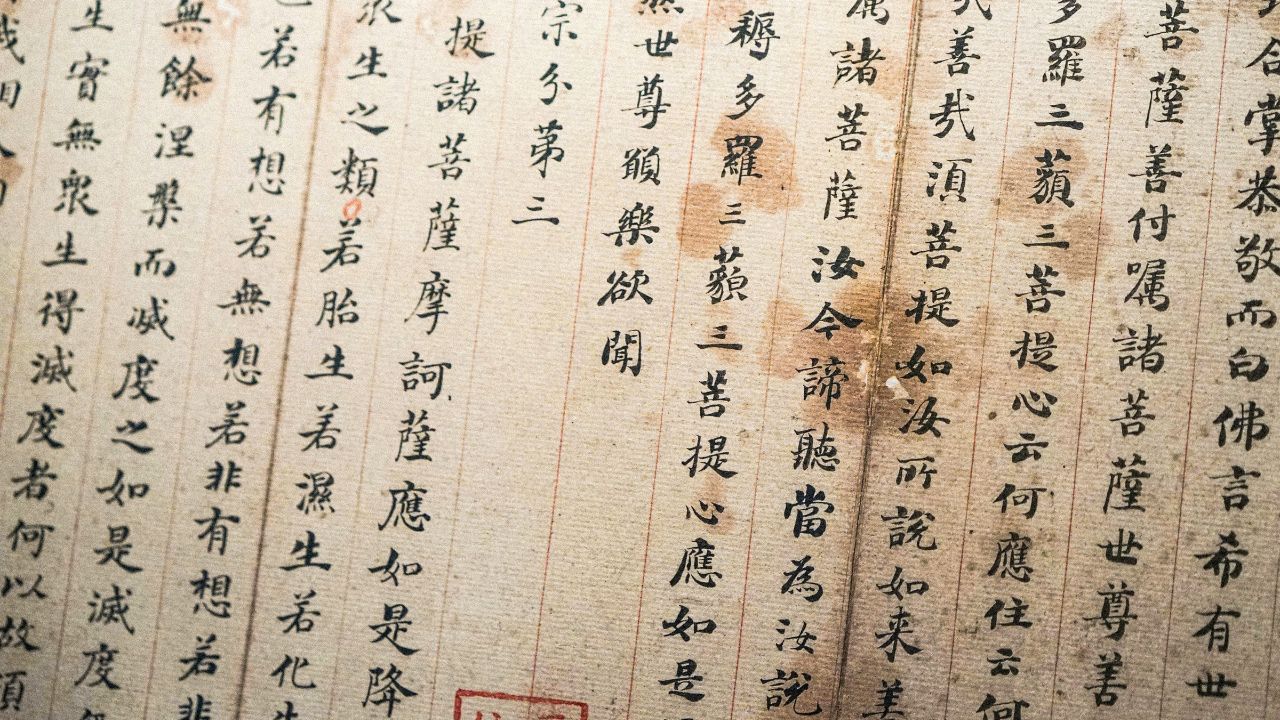
Not all writing moves across the page — some scripts traditionally fall straight down the page, line by line.
Languages that traditionally use it:
- Classical Chinese ??
- Traditional Japanese ??
- Historical Korean ?? (early Hangul documents)
Why top to bottom?
✍️ Early writing materials like bamboo strips and vertical scrolls naturally suited vertical writing. In classical formats, each vertical column would start at the right and move left across the page — a beautiful and efficient system for the time.
? Bottom-to-Top
While incredibly rare, some scripts or inscriptions move upward rather than across or down.
Examples that show it:
- Some Ogham inscriptions (ancient Celtic writing) ??
- Occasional ancient carvings and art forms
Why bottom to top?
✍️ In Ogham, messages were often carved along the edge of standing stones. Starting at the bottom and moving upward mirrored how a person would naturally carve or read the stone in a standing position. It’s a fascinating glimpse into how physical materials shaped writing practices.
? Boustrophedon
Imagine reading a line left to right, then the next line right to left — like an ox plowing a field. That’s boustrophedon!
Where it appeared:
- Ancient Greek inscriptions ??
- Early writing in other Mediterranean cultures
Why boustrophedon?
✍️ This style may have made continuous reading easier without needing to jump back to the starting edge every line. The term itself comes from Greek, meaning “as the ox turns,” and perfectly captures the zigzag motion across the page.
? Vertical Left-to-Right
Most vertical scripts flow from top to bottom and right to left — but Mongolian script flips the script, moving vertically top to bottom and across the page left to right.
Where it’s used:
- Traditional Mongolian script ??
Why vertical left to right?
✍️ The traditional Mongolian script developed for writing on long scrolls and portable documents. Its vertical form fit well with the way the script’s characters naturally connect. Moving across the page left to right made it easier to align with everyday handling and reading patterns.
? Reverse Boustrophedon
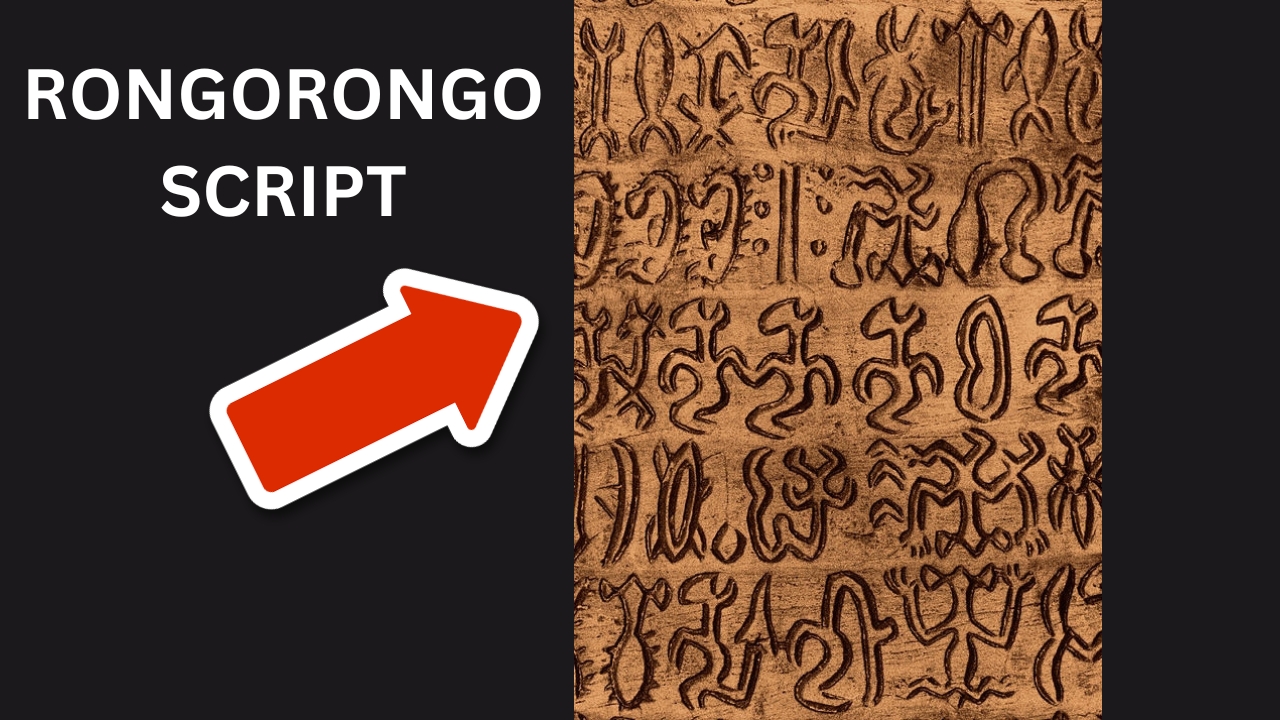
By Unknown author – Englert, Sebastian; edited and translated by William Mulloy (1970) Island at the Center of the World, Category:New York: Charles Scribner’s Sons, Public Domain, Link
Reverse boustrophedon takes zigzag writing even further — after each line, the tablet is rotated 180 degrees, and reading continues.
Where it appeared:
- Rongorongo script of Easter Island ??
Why reverse boustrophedon?
✍️ The exact reasons are still a mystery because Rongorongo remains undeciphered. But rotating the tablet could have helped the carver maintain consistent hand movement while working with large objects.
? Bidirectional / Mixed Scripts
Some scripts don’t stick to just one direction — they can switch depending on the content.
Where it happens:
- Arabic and Persian scripts (right to left for words, left to right for numbers) ????
- Modern Japanese (can be written vertically or horizontally) ??
Why mixed directions?
✍️ In Arabic, numbers naturally run left to right because of how they evolved alongside Indian numerals. In Japanese, modern influences like books, websites, and signs encouraged horizontal writing alongside the traditional vertical style. These scripts show how flexible and adaptable writing systems can be.
? Variable Directionality
Some ancient scripts didn’t stick to a single direction — they could flow left to right, right to left, or even vertically depending on the situation.
Where it appeared:
- Ancient Egyptian Hieroglyphs ??
Why variable directionality?
✍️ In Egyptian hieroglyphs, the direction often depended on the artistic layout and aesthetic needs. Readers would simply follow the way the characters (like animals or people) were facing. It made writing not just functional, but visually harmonious too.

Hey fellow Linguaholics! It’s me, Marcel. I am the proud owner of linguaholic.com. Languages have always been my passion and I have studied Linguistics, Computational Linguistics and Sinology at the University of Zurich. It is my utmost pleasure to share with all of you guys what I know about languages and linguistics in general.