

Fans of dark fantasy anime Attack on Titan will immediately recognize the word Sasageyo. If you don’t, try singing it. This word features prominently in the popular anime’s second opening theme, 『心臓を捧げよ!』 (“Dedicate Your Heart!”). But is the word “dedicate” really the best choice? How about “sacrifice,” or “offer” or even “lift up”? As with …
Marcel Iseli

For native and non-native English users alike, some expressions could get trickier to use. This is especially true with prepositions since they may sometimes have multiple meanings. The preposition with generally functions as an agentive or instrumental indicator for results and end-products. Adding which, a pronoun, after with creates a slightly more complex denotation which …
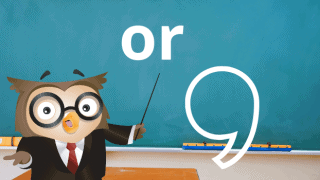
Efficacious communication is tantamount to the meticulous analysis of the subtlest linguistic nuances. These nuances may be found in word meaning, pronunciation, sentence structure, and as well as in non-lexical symbols. Punctuation marks, such as commas, are non-lexical signs whose principal role is to facilitate reading, either silently or vocally. Symbols of punctuation serve as …

Previous studies have found that the negation of ideas is a more complex process than affirmation. With that being said, it may lead to false retention of information in worst-case scenarios. When information is falsely associated with, counter-productive effects may occur, especially in more serious cases such as legally-related ones. In the crowded community of …

If you’re just starting out with Japanese, it can be easy to fall prey to common misunderstandings. Some of these are really insidious, so that it seems as though the Japanese language was designed on purpose to confuse people. Adjectives that end in “i,” like 可愛い (kawaii, “cute”) and 素晴らしい (subarashii, “splendid”), are great examples. …

How often do you have to bear with punctuation marks? They get pretty annoying sometimes, don’t they? Cheer up. Don’t let these sneaky little symbols bite your head off. This post will help you make sense of the comma after the word first and its other closely-related phrases. [toc] Do we need a …

Commas are small punctuation marks in the English language that are used in more ways than any other punctuation mark. The use of commas can be daunting since their use is so varied and wide. It seems hard to know when they should or should not be used. That is where this guide can help. …

Do you know what Latin abbreviations such as “i.e.”, “et al.”, and “e.g.”, stand for? And, have you been punctuating them properly? If so, then that means you’re saving grammar pedants from having either a stroke or cardiac arrest. So, whether you’re mentally reading e.g. as “exempli gratia” or simply as “egg sample”, as most …

When it comes to plural words, some languages have it easy. In Japanese, for instance, you simply use the exact same word with no spelling change required. English sometimes has plurals that are the same as the singular form (deer and deer, for instance), but more often than not it’s a perplexing task to figure …