
Generally speaking, linguistic literacy concurrently improves with age. This means that as we get older, we gain more ability to utilize higher forms of speech elements such as adverbs. Lexical competence helps people represent thoughts more accurately and cohesively, thereby entailing reasonability and communicative literacy. This post aims to present comma-related guidelines to the adverb …
Marcel Iseli
Introduction A well-known rhetoric tool is an anaphora which is the strategic repetition of word sequence that drives emphasis. In particular, reflexive pronouns such as “itself” and “themselves” are probably some of the most commonly used anaphoric words in everyday English. “Per se” is an anaphorical Latin phrase that roughly means “by itself” which is …

Although descriptivists sometimes clash with prescriptivists in terms of punctuation guidelines, punctuation marks generally have a single purpose. Non-lexical symbols, such as commas, generally function as linguistic devices that facilitate the disambiguation of meaning in the written language. Linguistic disambiguation is vital in increasing communication efficiency, thereby amplifying the significance of comma-related guidelines in texts. …

Language evolves constantly, and the presence of the Internet has really sped things up. One case in point are emoticons like the humble :). Not only do these pictographic characters express emotion, they’ve now been around long enough that their meanings are ambiguous. In this post, we’ll look at three possible meanings for the smiley …

Many languages have common phrases that are nearly identical, and English is no exception. In this article, we’ll tackle the commonly confused “as of now” and “as for now.” Although the only difference in these two phrases is the central words “of” and “for,” they have very different meanings. What does “as of now” …

Since language breathes arbitrariness and novelty, written linguistic devices can sometimes get shady. While words can be polysemic, the symbols that dictate how they should be read may further exacerbate writing issues. Even though punctuation marks occasionally seem intimidating, they do serve some beneficial purposes too. They guide readers not to get derailed from the …

A well-known fact is that language is arbitrary, and there lie the conflicting purposes of information expression. Information can either be affirmative or negative in sense, thereby necessitating words that could express idea affirmation or negation. Similarly, the salience of punctuation marks in the meticulous disambiguation of meaning in written language is indisputable. To proactively …
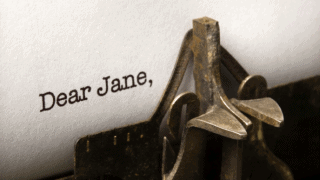
Comma placement rules are nonetheless precarious in many cases, particularly in writing people’s names. We may tend to consult Mr. Google before deciding whether or not to separate entities with commas. Being in the digital age has also made us quite dependent on direct messaging tools, which, in turn, exacerbated our complacency on punctuation rules. …

Like any other language, English is filled with words and expressions that we use on a day-to-day basis, plenty of which have just become more about etiquette than actually having a conversation. For example, when you see a colleague at work and ask them, “how are you doing?”, you’re not really expecting a long-winded answer …