

Time plays a salient role in human conversations which means time-related expressions are equally-vital in the process. One of the most functionally used words relevant to time in the English corpora is the adverb of frequency “often.” Besides, punctuation marks such as commas also facilitate the disambiguation of thought representations in the written language, and …
Search results for: unnecessary

The use of adverbs implies higher-order language processing as they are generally more complex than nouns and verbs. Since adverbs can have multiple functions, they are categorized into various types according to grammatical use. One way to express linguistic content richness is by means of intensification via adverbs of emphasis. Read on to further understand …

Have you ever been pestered by how punctuation marks work? And, have you ever wished you never had to consult Dr. Google for comma placement rules, because you know for a fact that these are supposed to be a no-sweat core skill? This post addresses comma-related linguistic nuances altogether with the usage of the word …
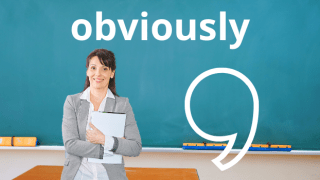
Generally speaking, linguistic literacy concurrently improves with age. This means that as we get older, we gain more ability to utilize higher forms of speech elements such as adverbs. Lexical competence helps people represent thoughts more accurately and cohesively, thereby entailing reasonability and communicative literacy. This post aims to present comma-related guidelines to the adverb …
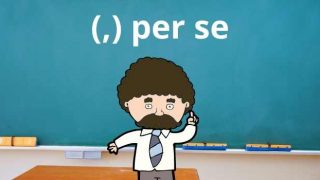
Introduction A well-known rhetoric tool is an anaphora which is the strategic repetition of word sequence that drives emphasis. In particular, reflexive pronouns such as “itself” and “themselves” are probably some of the most commonly used anaphoric words in everyday English. “Per se” is an anaphorical Latin phrase that roughly means “by itself” which is …

Although descriptivists sometimes clash with prescriptivists in terms of punctuation guidelines, punctuation marks generally have a single purpose. Non-lexical symbols, such as commas, generally function as linguistic devices that facilitate the disambiguation of meaning in the written language. Linguistic disambiguation is vital in increasing communication efficiency, thereby amplifying the significance of comma-related guidelines in texts. …
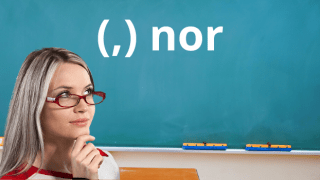
A well-known fact is that language is arbitrary, and there lie the conflicting purposes of information expression. Information can either be affirmative or negative in sense, thereby necessitating words that could express idea affirmation or negation. Similarly, the salience of punctuation marks in the meticulous disambiguation of meaning in written language is indisputable. To proactively …
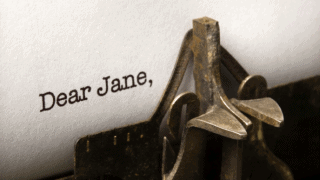
Comma placement rules are nonetheless precarious in many cases, particularly in writing people’s names. We may tend to consult Mr. Google before deciding whether or not to separate entities with commas. Being in the digital age has also made us quite dependent on direct messaging tools, which, in turn, exacerbated our complacency on punctuation rules. …
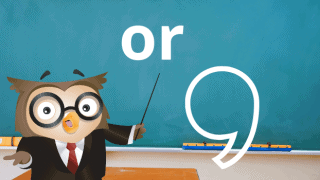
Efficacious communication is tantamount to the meticulous analysis of the subtlest linguistic nuances. These nuances may be found in word meaning, pronunciation, sentence structure, and as well as in non-lexical symbols. Punctuation marks, such as commas, are non-lexical signs whose principal role is to facilitate reading, either silently or vocally. Symbols of punctuation serve as …