
Writing in English may sometimes put us at the end of our wits. We may occasionally wish to just become walking dictionaries so we won’t run out of lexical resources. Words with minute differences in spelling and pronunciation often get us stuck in a spider’s web because we may be prompted to consult either Mr. …
Comma Rules
Have you ever been in doubt about where to put sneaky commas in sentences? And, have you mistakenly thought of a word belonging to one part of speech when, in fact, it doesn’t? Writing may seem to be one of the most agonizing tasks for most people, except for experts in the field of course. …
One of the many troubles encountered in writing is with multifaceted words and punctuation marks. Words wearing multiple faces are tricky because we could get tangled up in which denotation or connotation should be applied in what sense. Punctuations, especially commas, are but sneaky too since they have more grammatical and stylistic rules to follow. …
One of the most grueling decisions to make in writing is related to punctuations, especially commas. Although word choice and sentence construction are already devious trickeries, comma-decisions may further crucify native and non-native writers alike. What else complicates writing? Adverbs, of course. Especially those with multiple personalities. This post’s goal is to address comma-related decisions …
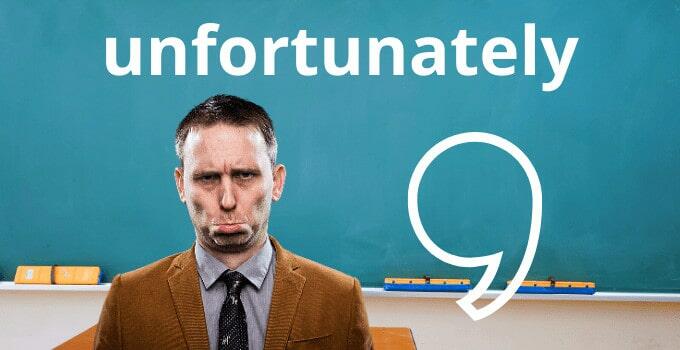
While a ship navigates via radar and the three kings by a star, a reader is also guided by punctuations in texts. Punctuations, in essence, serve as mountain beacons so readers so do not get lost in the savage jungle of words. Without punctuations such as commas, sentences and paragraphs would be nonetheless incoherent and …
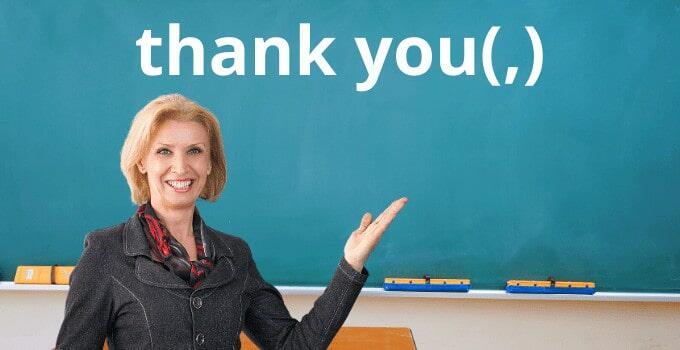
Researchers have shown that being polite has a ‘positive social value’ in many cases. In other words, it pays to be polite. One of the easiest ways to do that, as any parent knows, is to say “please” and “thank you.” But where do the commas go if you’re thanking someone? Read on, please, to …
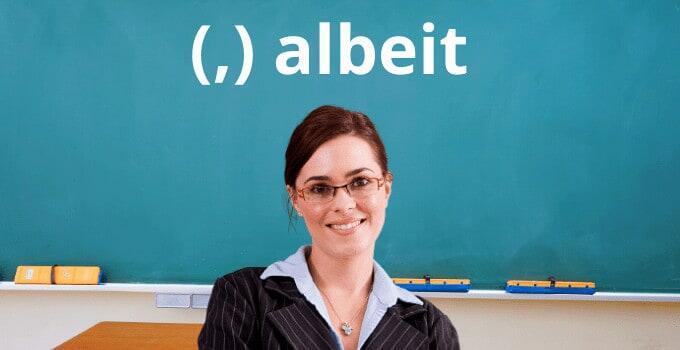
The written system of non-lexical items in texts is known as punctuation. Punctuation marks are guiding signs for readers so the words do not crash into one another, thereby preventing word traffic collision. In short, punctuation marks are the traffic signals in the crowded community of paragraphs. And why are these marks important? Of course, …

Punctuations provide prosodic cues that convey the intention and tone of texts. The rhythm of the text can be manipulated by the mastery of punctuation placement, such as commas. Put simply, sentences without punctuations are like songs without beats while punctuation misplacement is equivalent to a person who could sing, yet hits the wrong notes …
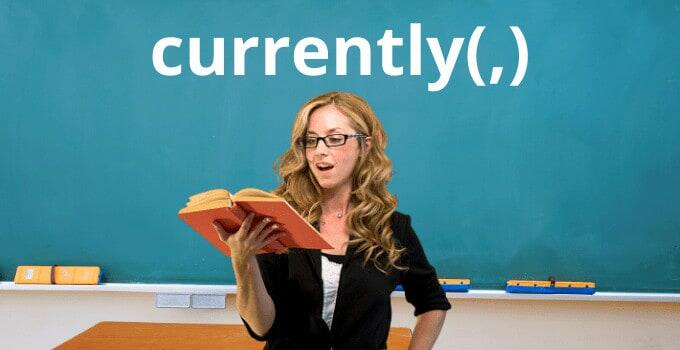
Some words or phrases are often or always used in a way that means they will need to be followed by a comma. Other words or phrases can take up several different positions in a sentence. Whether or not a comma is needed will vary based on where the word is. “Currently” is an example …